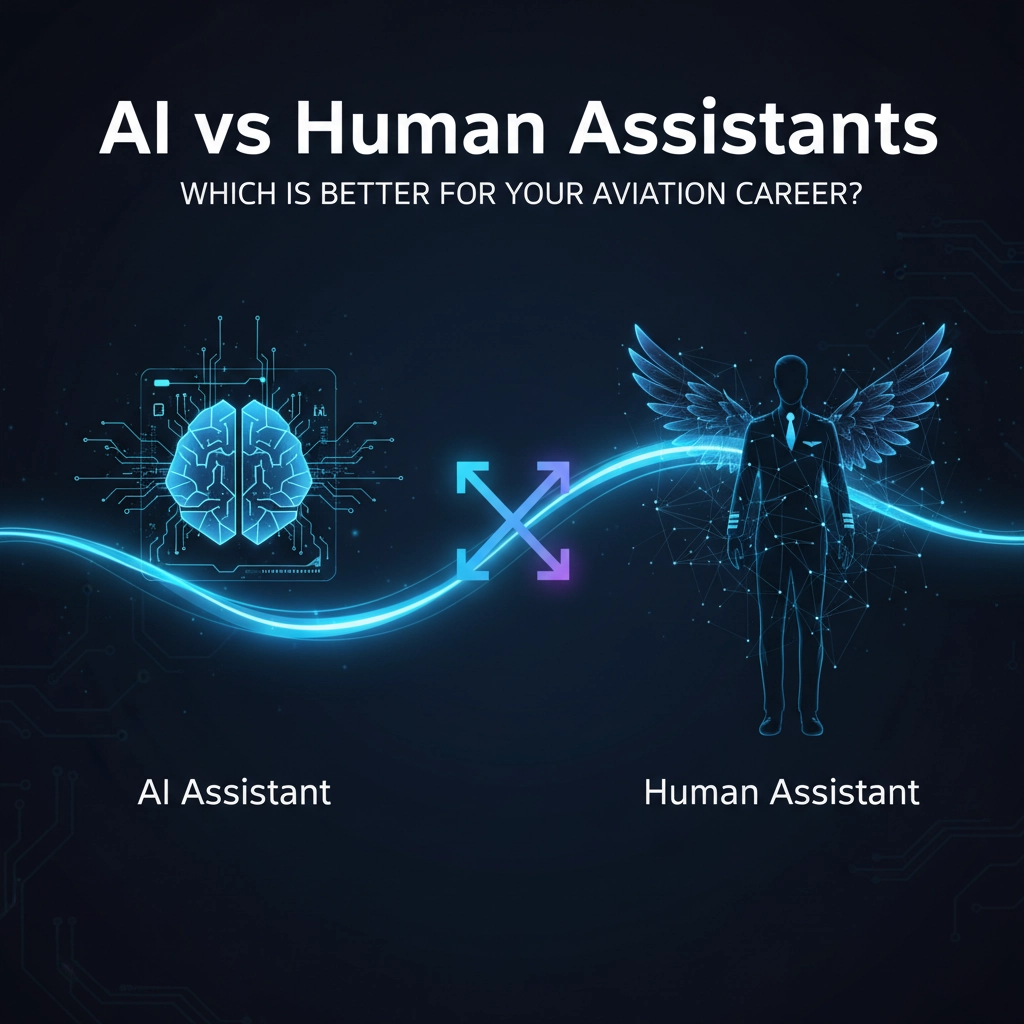
AI vs Human Assistants: Which Is Better For Your Aviation Career?
The aviation industry stands at a crossroads. On one side, artificial intelligence promises unprecedented efficiency, real-time data processing, and cost savings. On the other, human expertise offers irreplaceable judgment, adaptability, and personal touch that no algorithm can replicate.
For aviation professionals, this isn’t just a philosophical debate: it’s a career-defining question that affects everything from daily operations to long-term professional growth. Should you embrace AI assistants, stick with human support, or find a middle ground? The answer isn’t as clear-cut as you might think.
The Rise of AI Assistants in Aviation
Artificial intelligence has infiltrated nearly every aspect of aviation operations, from cockpit management systems to customer service chatbots. AI assistants excel at handling repetitive, data-intensive tasks that once consumed hours of human time.
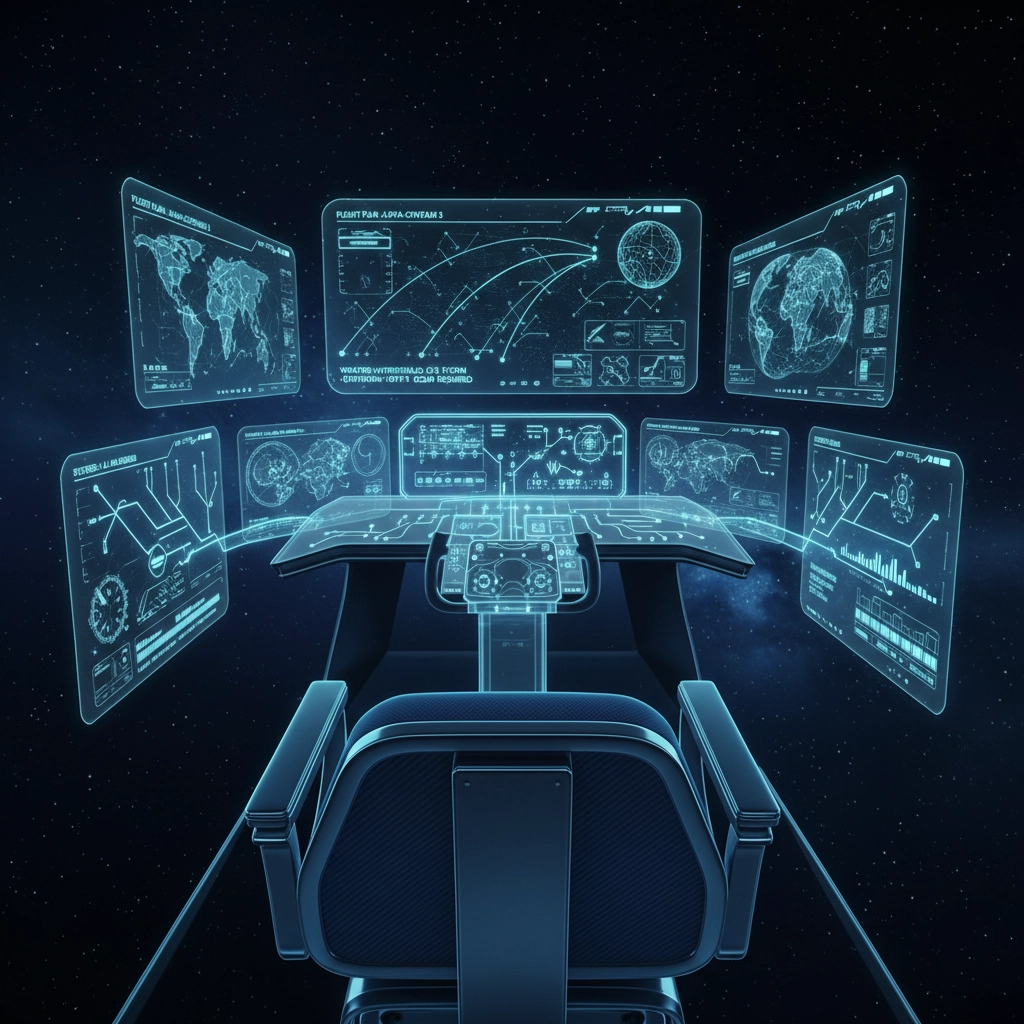
In flight operations, AI systems process vast amounts of meteorological data, optimize flight paths in real-time, and manage routine checklists with mechanical precision. These systems never get tired, never forget a step, and can analyze thousands of variables simultaneously to make split-second recommendations.
Predictive maintenance represents one of AI’s most impressive aviation applications. By analyzing engine performance data, vibration patterns, and historical maintenance records, AI can predict mechanical issues before they occur. This prevents costly delays and enhances safety: two critical factors in aviation careers.
AI-powered virtual assistants like Qatar Airways’ Sama 2.0 handle customer service interactions through conversational AI, processing booking changes, answering routine questions, and managing passenger requests 24/7. These systems can manage multiple languages, access real-time flight information, and provide instant responses that would take human agents significantly longer.
Cost efficiency drives much of AI adoption in aviation. Automated processes for baggage handling, check-in procedures, ticketing, and boarding reduce operational costs while speeding up passenger flow. For aviation professionals, this means more resources can be allocated to strategic initiatives and career development opportunities.
However, AI assistants have limitations. They struggle with novel situations that fall outside their programming parameters, lack emotional intelligence for handling stressed passengers, and cannot make intuitive leaps that experienced aviation professionals take for granted.
Human Assistants: The Irreplaceable Element
Despite technological advances, human expertise remains essential in aviation. Human assistants bring emotional intelligence, cultural awareness, and adaptability that no AI system can match.

Critical decision-making represents humans’ strongest advantage. When unexpected weather patterns emerge, when mechanical issues require creative solutions, or when passenger emergencies demand immediate judgment calls, human professionals excel. They can quickly assess complex situations, consider multiple variables, and make decisions that prioritize safety and efficiency.
Human assistants understand context and nuance in ways that AI cannot. They recognize when a “routine” maintenance check might need extra attention based on subtle environmental factors, when passenger behavior suggests potential security concerns, or when crew dynamics require intervention to maintain optimal performance.
The personal touch matters tremendously in aviation careers. Human assistants can build relationships with clients, understand individual preferences and concerns, and provide customized service that goes beyond scripted responses. They offer local insights, share personal anecdotes, and adapt their communication style to match different personality types.
Cultural sensitivity and interpersonal skills remain uniquely human strengths. Aviation professionals often work with diverse international teams and passengers from various cultural backgrounds. Human assistants can navigate these complex social dynamics, understand unspoken communication cues, and adjust their approach accordingly.
Professional development also benefits from human interaction. Mentorship, knowledge transfer, and career guidance require the empathy and understanding that only experienced human professionals can provide.
Direct Comparison: Strengths and Weaknesses
| Factor | AI Assistants | Human Assistants |
|---|---|---|
| Speed | Instant data processing and responses | Thoughtful analysis may take longer |
| Accuracy | Highly accurate for routine, data-driven tasks | Excellent for complex, nuanced situations |
| Cost | Lower operational costs over time | Higher labor costs but adds strategic value |
| Availability | 24/7 operation without breaks | Limited by work schedules and time zones |
| Adaptability | Limited to programmed scenarios | Highly adaptable to unexpected situations |
| Learning | Continuous improvement through data analysis | Experience-based learning and intuition |
| Emotional Intelligence | None | High: can read situations and emotions |
| Innovation | Pattern recognition within existing data | Creative problem-solving and strategic thinking |
The Hybrid Approach: Best of Both Worlds

Forward-thinking aviation professionals are discovering that the real competitive advantage lies not in choosing between AI and human assistants, but in combining their complementary strengths.
This hybrid model positions AI as the intelligent foundation that handles background processing, data analysis, and routine tasks, while human professionals focus on strategic decision-making, relationship building, and complex problem-solving. The result is enhanced situational awareness, improved operational efficiency, and reduced risk: all critical for successful aviation careers.
AvvA’s proprietary process exemplifies this approach. The system uses AI to handle background tasks and generate insights, relies on human Wingmates to add personal touches and utilize client personality profiles, and constantly refines these profiles using new insights from completed tasks. This ensures personalized and evolving service that adapts to each aviation professional’s unique needs.
This patent-pending process creates a learning loop where AI efficiency combines with human intuition. The AI component processes travel preferences, schedule patterns, and operational requirements, while human Wingmates interpret this data to provide customized recommendations and handle complex requests that require personal judgment.
Career Implications for Aviation Professionals

The integration of AI and human expertise creates new career opportunities rather than eliminating existing ones. Aviation professionals who understand both traditional expertise and AI capabilities position themselves as leaders in industry innovation.
Essential skills for modern aviation careers now include digital literacy, understanding of AI systems, and proficiency with data analytics tools. However, these technical skills must be balanced with enhanced interpersonal abilities, strategic thinking, and adaptability: uniquely human traits that become more valuable as AI handles routine tasks.
Career advancement increasingly depends on your ability to work alongside AI systems effectively. This means understanding how to interpret AI recommendations, knowing when to override automated suggestions, and leveraging AI insights to make better strategic decisions.
Specialization opportunities are emerging in AI-human collaboration roles. Positions like “AI Operations Specialist,” “Human-AI Interface Coordinator,” and “Intelligent Systems Manager” didn’t exist five years ago but are becoming crucial in modern aviation operations.
The most successful aviation professionals will be those who view AI as a powerful tool that amplifies their capabilities rather than a threat to their career prospects. They’ll use AI to handle time-consuming data processing while focusing their energy on high-value activities like relationship building, strategic planning, and creative problem-solving.
Making the Right Choice for Your Career
The question isn’t whether AI or human assistants are “better”: it’s about finding the right combination for your specific career goals and operational needs.
For routine operational support, AI assistants offer unmatched efficiency and cost-effectiveness. They excel at scheduling, data analysis, routine communications, and process automation. These capabilities free up time for more strategic activities that advance your career.
For complex decision-making, relationship building, and strategic planning, human assistants provide irreplaceable value. They understand context, offer creative solutions, and can adapt to unique situations that AI cannot handle.
The optimal approach combines both: AI handles the background processing and routine tasks, while human expertise guides strategy, manages relationships, and makes critical decisions. This hybrid model maximizes efficiency while maintaining the personal touch and strategic thinking that drive career success.
Aviation professionals who embrace this collaborative model, using AI to amplify their capabilities while maintaining focus on uniquely human skills, will find themselves best positioned for long-term success in an increasingly automated industry.